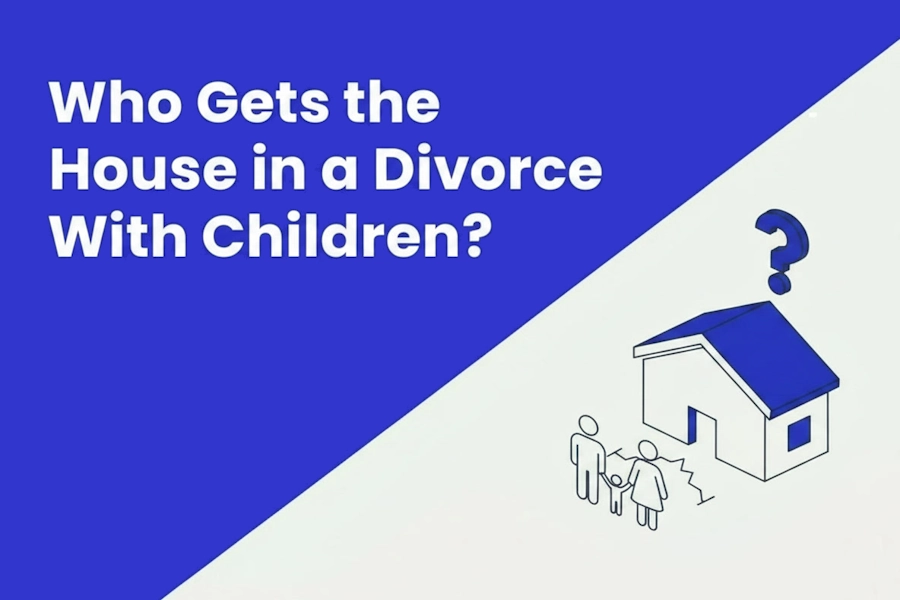
One of the most difficult aspects of separation is who gets the house in a divorce with children. It goes beyond just property. It could be where the kids sleep, go to school, and feel safe amid all of the changes that have taken place.
Therefore, what about the house in case of a divorce involving kids? The children themselves don‘t determine that. It‘s unlikely for the court to give the house to the parent simply because the kids stay there.
In cases of uncontested divorces, the fate of the couple usually lies in their hands.
If they settle matters related to the child, property settlement, who will cover the mortgage, and who will take custody of the kids, then they can save themselves from costly legal hassles.
They can even prepare their divorce papers.
Quick Answer: Who Owns the Property After a Marriage With Children Falls Apart?
When there is a divorce involving children, the house usually belongs to the party that holds a property interest. It will go to the individual who can afford to maintain ownership of the house.
The couple may also make a decision about which parent keeps the house after getting divorced with children. In case of marital property, both spouses might enjoy property rights.
This is even the case when only one parent remains in the residence with their offspring.
The Short Answer Parents Need First
Family residence is most often divided using property division methods. There are many things to think about when considering this question:
- Is the home property marital or separate?
- Is it a partially mixed property?
- Are there issues of equity, mortgage payments, refinancing, or buyouts?
If both parents decide on this issue, they can find a way out that will preserve the children’s schedule. In case the parents fail to come to an agreement, the case might be taken to court.
The outcome of the matter will depend on the state laws, financial matters, type of property, and needs of the children.
Why Children Can Matter Without Deciding Ownership
The reason children are important is that divorces are not only financial in nature. Suddenly changing one’s location can cause problems at school, daycare, transport, healthcare, and even mental well-being.
But that doesn’t mean that the children cancel property rights. In case it’s marital property, the other spouse can claim the property. When both spouses are paying off the loan, the mortgage belongs to both of them.
Does Child Custody Entitle You to Stay in the House?
Custody alone doesn’t entitle you to retain the house. It can influence which party remains in the household during the divorce. It may become significant depending on whether the schooling for the child has to be stable.
However, the problem of the rights of property arises. So do mortgage responsibility, state law, and affordability.
Custody, Parenting Time, and the Child’s Primary Home
One of the initial decisions in divorce is which parent will have primary custody of the kids most of the time. This involves matters relating to routine, school, visiting times, and caregiving.
The issue of decision-making must also be sorted out.
When one parent takes most of the nights with the kids, it would be beneficial for him or her to reside in the house. It enables the kids to live closer to their school, friends, childcare services, and even relatives. There are situations where both parents consider it as the least disruptive option.
However, there should be compatibility between both the parenting plan and the property settlement agreements. Even if a parent holds primary responsibility for parenting, they can find themselves unable to maintain possession of the family home.
Matters such as refinancing, maintenance costs, mortgage repayments, and equity buyouts will all come into play. That is why parenting and property issues should be reviewed together.
School, Routine, and Housing Stability
The stability of schools is another factor that makes parents want their kids to stay at home. Moving could result in a change of the whole school district. It might also make commuting more difficult.
Parents need to take into consideration:
- Whether moving would change the child’s school;
- How far each parent would live from school;
- Whether childcare still works;
- Whether the child has medical or developmental needs;
- Whether the child needs special support;
- Whether transportation between homes is realistic;
- Whether the home helps emotionally or hurts financially.
Of course, stability is important. However, it should not make people remain in a home that is unaffordable for them.
Why the Other Parent May Still Have Equity Rights
Even when one parent remains in the home with the children, the other parent can have the right of equity. It happens in divorce situations when the house itself falls into the category of marital property.
Equity refers to the total worth of the property, less any existing mortgages or liens against it. Both parties will have rights to the value of that equity according to state laws.
Several methods of dividing with equity include:
- One parent may buy out the other;
- The home may be sold;
- One spouse may receive other marital assets instead;
- Parents may agree to delay the sale;
- In rare cases, parents may co-own the home for a limited time.
The main point is simple. Staying in the home is not the same as owning all of it.
What Courts May Consider When Deciding the Family Home
Several issues may be considered by the court in determining what is to happen to the family home. The child’s stability is another factor to consider.
Stability and other considerations, such as schooling, transportation, and residence, will be among them. There isn’t a single law for this.
Rules for divorce property rights differ from state to state.
Marital Property vs. Separate Property
The first issue that needs clarification here is easy. Is the house marital property, separate property, or both? The determination may have implications for who gets the house in a divorce with children, as well as any equity accrued thereon.
Marital property generally refers to property that is obtained during the marriage. Marital property differs from state to state. In most cases, a house that is acquired during the marriage using marital funds will be considered marital property.
Most of the time, separate property is quite distinct. It refers to property owned prior to the marriage itself. However, there are instances wherein separate property becomes tricky.
This is because the marital property was used to pay off the mortgage on the property. A home can also be mixed. One spouse may have owned it before marriage. Then both spouses may have used marital funds for years of payments or major upgrades.
In that case, the original owner may still have a separate property claim. However, it is also possible for the marital property to be claimed.
This can involve part of the increased value or possible reimbursement, depending on state law. That is why the family home can be more complicated than other properties.
Community Property vs. Equitable Distribution
It can also depend on the state’s statute. Under community property laws, marital property belongs equally to both individuals. Some states that follow community property include California and Texas.
Most states adhere to equitable distribution. The list includes Florida, New York, North Carolina, Illinois, Maryland, Pennsylvania, Georgia, Virginia, and many more.
Equitable distribution refers to an even splitting of the marital estate. Even does not necessarily translate into equal.
Mortgage, Affordability, and Who Can Maintain the Home
The parents may choose to keep the house in order to benefit their children. Mortgaging the house will mean more than just keeping up with monthly repayments. It can also refer to:
- Mortgage payments;
- Taxes on property;
- Homeowners insurance;
- Utilities;
- HOA fees;
- Repairs;
- Maintenance;
- Refinance costs;
- Emergency expenses.
Affordability is not limited to affordability now. It will also depend on alimony, custody arrangements, and divorce expenses. All those figures can completely alter the entire picture.
It is possible for a court or settlement to evaluate the ability of the parent to keep the house safe. Late payments, tax debts, risk of foreclosure, or even a sale under pressure could generate further problems.
Children require safety, but not one that will continue creating problems.
Children’s Best Interest and Home Stability
Some states enable courts to take into account the children in determining the fate of the marital home. It impacts who will stay temporarily. Additionally, it may influence property division in some cases, too. It does not give the children ownership of the house, though.
The child’s best interests are only one consideration among many others. Property considerations, economic considerations, mortgage considerations, and state law are other factors that might come into play.
For instance, under California law, a deferred sale of the house may be possible in some circumstances. The Florida law can consider the factor of the necessity of retaining the marital home.
Similarly, North Carolina may also take into consideration the needs of the parent having custody of the property of the house. In Maryland, it is possible to occupy the marital home.
The equitable and just division is used in Texas.
Common Outcomes for the House in a Divorce With Children
Consequences of separation can be rather simple.
- First, one party stays in the home while the other is paid off.
- Second, it is sold, and money is distributed between the parties.
- Third, one person occupies the house for a certain period of time, after which the property is eventually sold.
The selection of which course to take will depend on many factors. The requirements of the children are among the issues to consider.
So do home equity, loan terms, refinancing, alimony, and cooperation between the parents.
There isn’t one solution that will be right for everyone. In addition to asking “Whose house is it?,” it also makes sense to consider, “What housing arrangement will last and be fair, reasonable, and understandable?”
One Parent Keeps the House and Buys Out the Other
With divorce house buyout, only one party gets to retain the home. They pay the other party an amount equal to their share in the equity value of the property.
The first step in a buyout is the property valuation. The parents will make use of an appraisal, market analysis, or any other mutually agreed means.
Afterward, the parents will determine how to allocate the equity among themselves.
The Sale of the House and the Distribution of Equity
At times, the best course of action may involve selling the home. This may be necessary if neither parent can afford the mortgage alone.
A sale usually starts with paying off the mortgage. Liens, closing costs, and sale expenses also come out first. The resulting net amount is split according to the divorce agreement or court order.
One Parent Stays Temporarily Before a Later Sale
A temporary stay can help when children need short-term stability. This can reduce disruption. But it must be clearly documented. A vague promise to “sell later” can create conflict.
Temporary occupancy works best when parents stay organized. Deadlines should be clear. Payment duties should also be clear from the start.
Parents Co-Own the Home for a Limited Time
Some parents keep joint tenancy after divorce for a limited time. They may do this so children can finish school.
Parents should agree on key points:
- Mortgage payments;
- Property taxes;
- Insurance;
- Repairs;
- HOA fees;
- Access to the property;
- Missed payments;
- Sale timing;
- Buyout rights;
- Dispute resolution.
Co-ownership is not just an emotional choice. It is a financial partnership after divorce. With poor communication, this can become very difficult to manage rather quickly.
Who Gets to Live in the Marital Home During Divorce?
The person who remains in the house during divorce is not necessarily going to be the same one who retains possession at the end of the process. It could be a matter of choice, protection, convenience, or even finances.
Temporary occupancy does not always determine the final property settlement. It only answers who stays there for now.
Temporary Orders and Exclusive Use of the Home
The temporary order may determine who will reside in the house until the end of the divorce proceedings. In some places, this may be called temporary exclusive use, exclusive possession, or exclusive occupancy of the marital home.
A court may consider this when shared occupancy creates conflict. Parents who agree on temporary occupancy should put the terms in writing.
Moving Out, Safety, and Practical Risks
Most parents fear that moving out will mean giving up the house and custody. Moving out does not have to be wrong. Likewise, staying is not necessarily the right course of action.
Leaving can impact logistics, parenting schedules, costs, and negotiations. When there is any abuse, threat, coercion, conflict, or danger, you must get legal or emergency assistance.
Prior to leaving, parents need to attempt to make temporary arrangements in writing. In case an agreement cannot be reached, consult a lawyer.
When Parents Reach Agreements About Temporary Housing
Parents can ease the stress of the situation by agreeing on who will stay in the home during divorce proceedings. A practical temporary arrangement should answer:
- Who stays in the house?;
- How will the mortgage be paid?;
- Will the utility bills and taxes be paid?;
- Will this be a temporary or permanent agreement?;
- What would happen if it fails?.
Clear writing is essential. A peaceful agreement today could save you from a huge fight tomorrow.
Who Pays for the Mortgage During Divorce?
Mortgage responsibility during divorce depends on several things. The loan documents matter. So do temporary agreements, temporary court orders, and final settlement terms. Missed payments can damage credit.
Foreclosures may also occur during the process of divorce. It needs to be decided who will pay, when he or she will make the payment, and what consequences will follow an absence of payment.
Mortgage Payments Before the Divorce Is Final
Before the divorce is final, parents need a clear payment plan. One spouse may pay the mortgage. Both may contribute. Payments may also be offset against support or reviewed later in property division.
In cases where one spouse pays more than his or her share, this could influence the outcome of the agreement. Silence is definitely not what one should do here.
What If Both Names Are on the Mortgage?
Both spouses might continue to have liability for the loan to the bank, despite what the divorce decree says. The settlement of the divorce may specify responsibility. But it usually does not remove a spouse from the loan.
That is why refinancing is common in a buyout. The partner who keeps the house will require refinancing the house under his/her name. If refinancing is not possible, parents may need another plan.
Taxes, Insurance, Utilities, and Repairs
A divorce settlement should also address taxes, insurance, utilities, HOA fees, repairs, and maintenance. These costs can create conflict if they are not clearly assigned:
- Who pays for a broken furnace before sale?
- Who pays insurance if one parent lives in the home?
- Who handles a roof repair?
- Who covers utilities while the home is listed?
Parents should avoid informal assumptions. The agreement should also explain how expenses affect equity division.
Can a Stay-at-Home Parent or Mother Keep the House?
The court or settlement may consider caregiving, the children’s main home, support, and housing stability. But property rights still matter.
So do mortgage affordability, state law, and the other spouse’s equity. This usually happens when only one parent is responsible for the majority of the child-rearing.
Why Gender Usually Does Not Decide the Home
The decision is usually not based on mother versus father. It is based on facts. Children’s needs, property law, finances, caregiving roles, mortgage responsibility, and housing plans all matter.
Courts generally look at practical questions:
- Who has primary parenting time?
- What is fair to both spouses?
- What would be good for the kids?
- What does state property law require?
- Who will be able to make mortgage payments?
Neutral parent language matters. Either parent can be the primary caregiver.
Financial Ability and Support Orders
A stay-at-home parent may need child support, spousal support, or other assets to keep the house. Support can help. But it does not automatically make the mortgage affordable.
The parent keeping the home may still need to qualify for refinance. They may also need to pay insurance, taxes, repairs, and daily housing costs. If income is limited, lenders may have specific rules.
Child Stability vs. Long-Term Affordability
One of the toughest decisions in a divorce who gets the house with children. Keeping the child in the same home may protect routine, school continuity, and emotional stability. But an unaffordable home can create stress later.
Sometimes, selling the home is the stronger parenting decision. In other cases, a buyout or temporary stay can work.
How a House Buyout Works in Divorce
A divorce house buyout usually means one spouse keeps the home. The process may involve an appraisal, mortgage payoff, equity calculation, refinance, or asset offset.
Buyouts are common when children are involved.
How Home Equity Is Usually Estimated
A simple equity estimate starts with one formula. Estimated home value minus mortgage balance and liens equals equity. Parents may use:
- A professional appraisal;
- A comparative market analysis;
- A mortgage payoff statement;
- Recent comparable sales;
- An agreed valuation date.
After equity is estimated, parents must decide how to divide it. The split may be equal or unequal.
Refinancing and Removing a Spouse From the Mortgage
A buyout will require refinancing if both parties have their names on the mortgage. The parent keeping the house may need a new loan in their own name.
If refinancing fails, the settlement should explain what happens next. A buyout agreement needs a backup plan.
Tax and Cost Issues to Flag
A home buyout can include costs parents may not expect. These may include refinance fees, closing costs, transfer costs, appraisal fees, title costs, and property tax changes. Future sale costs may also matter.
Parents should speak with a tax or financial professional before finalizing a high-value buyout.
State Laws That Can Change the Answer
State law can change who gets the house in a divorce with children and who may stay there. There are community property laws in some states. In others, there are equitable distribution laws.
Some also let courts consider whether a child should remain in the marital home.
Community Property States
In community property states, most property owned by couples is considered the joint property of both. California and Texas are two major examples. But the details still depend on state law.
In California, a deferred sale of the home order may let a custodial parent stay in the family home for a time. Texas applies the “just and right” principle.
Equitable Distribution States
Most states use equitable distribution. This division of property is always done in a fair way. Not always in an equal way. Courts may look at finances, debts, caregiving roles, custody, contributions, and housing needs.
Florida, New York, North Carolina, Illinois, Maryland, Pennsylvania, Georgia, and Virginia are examples of equitable distribution states. In these states, one spouse may receive the family home.
State-Specific Examples Parents Should Know
In many U.S. states, one parent may stay in the marital residence if that helps reduce disruption for the children. The rules are different from state to state, like this:
- Florida courts may consider whether keeping the marital home for a dependent child makes sense. The court looks at fairness, the child’s best interests, and whether the arrangement is financially possible;
- North Carolina also looks at the needs of the parent who has custody. This can include whether that parent should live in, or own, the marital residence;
- Illinois allows courts to consider awarding the family home to the spouse who has the children’s primary residence. The court may also allow that spouse to live there for a reasonable period;
- Maryland courts can award possession and use of the family home. When children are involved, the court must consider their best interests;
- In New York, an uncontested divorce requires agreement on children, finances, and property. If the spouses do not agree, issues like home occupancy and property division can become contested;
- Texas utilizes the principle of “just and right” division. The court considers the rights of each spouse and any children of the marriage.
These examples show why a parent-focused house decision should be local, practical, and realistic.
How to Decide What Happens to the House in an Uncontested Divorce

In an uncontested divorce, spouses should agree on the house before finalizing paperwork. The agreement should explain who lives there, who pays the mortgage, and whether the home will be sold, refinanced, bought out, or kept for a limited time.
This becomes even more important when there are children.
Questions Parents Should Answer Before Filing
Before filing, parents should answer the main housing questions in writing. This prevents misunderstanding in the future. Start with these:
- Who will occupy the home?
- Where will the kids reside on most days?
- Who will make the mortgage payments?
- Who will pay the bills, including taxes, insurance, and maintenance costs?
- Is the house considered marital property, separate property, or both?
- Will the home be sold, refinanced, bought out, or kept temporarily?
- What valuation method will be used?
- What happens if refinancing fails?
- Who pays for repairs before sale or refinance?
- How does the housing plan fit the parenting schedule?
- Will the children continue to attend the same school?
These are questions that have less to do with legal obligations. They help parents move from uncertainty to a workable plan.
What to Include in a Divorce Settlement Agreement
The settlement agreement should clearly explain in a divorce what happens to the house. This will depend on the state in question, as well as the individual case.
Still, parents should usually address ownership, occupancy, mortgage payments, refinancing, buyout terms, sale timing, repairs, closing costs, and missed payments.
When to Get Legal or Financial Advice
Parents should consider legal or financial advice in complex housing situations. Advice may also be needed if there are tax concerns, foreclosure risks, bankruptcy issues, or pressure to sign quickly.
These problems can affect both parents long after the divorce is final. Legal advice is also important when parents disagree.
Online forms can help with agreed and uncontested paperwork.
How YourForms Can Help Parents Organize an Uncontested Divorce
YourForms can help spouses prepare state-specific uncontested divorce documents. It also indicates how to file the document when the spouses agree on the terms.
If parents agree on children, property, and the family home, an online divorce document workflow may help organize the paperwork.
Parents can start with online divorce forms if they are ready to organize agreed-upon terms. In addition, they can calculate the divorce expenses using the divorce calculator.
When YourForms May Fit a Divorce With Children and Property
YourForms may fit when both spouses agree on the divorce terms. This includes parenting issues, property division, mortgage responsibility, and what will happen to the family home
Children and property do not automatically make a divorce contested. The key question is agreement. If both parties have agreed upon terms, then the process of an uncontested divorce flowchart can be followed.
What YourForms Does Not Do
YourForms is not a law firm. It is not a legal service provider. It is impartial towards both parties. Also, it also does not decide whether one parent should keep the house.
YourForms does not replace an attorney in complex cases. Parents should speak with a qualified professional when they need personal advice.
Preparing Forms After You Agree on the House
Once parents agree on the house, they can move toward the paperwork. They should also agree on parenting terms, support, and property division before filing. A clear agreement makes the process easier.
YourForms can help turn agreed-upon information into state-specific divorce document packages.
Final Checklist for Parents Deciding What Happens to the House
Before deciding who gets the house in a divorce with children, parents should review the main facts. They should also estimate equity, check the mortgage balance, and decide whether either parent can afford the home.
This is what needs to be done to ensure your agreement:
- Determine the nature of the property: marital, separate, or mixed;
- Estimate the home’s value;
- Get the mortgage payoff amount;
- Check for liens or unpaid taxes;
- Decide whether either parent can afford the home;
- Consider the children’s school, routine, and primary residence;
- Choose sale, buyout, temporary stay, refinance, or co-ownership;
- Decide who will pay for the mortgage before divorce;
- Decide who will pay property taxes, insurance, and utilities;
- Set deadlines for refinance, sale, or buyout;
- Create a backup plan if refinancing fails;
- Put temporary living arrangements in writing;
- Get legal or financial advice if there is conflict, high-value property, safety risk, or uncertainty.
The marital home often becomes the focus of the divorce. The goal is to create a stable, affordable, and legally clear path for the children and both parents.