Many relationships suffer from a quiet space between partners, often described as a sexless marriage. It’s not simply about having sex less than 10 times a year.
It’s more about feeling disconnected, rejected or very far apart emotionally. If you are feeling lonely, confused or questioning your own worth due to feeling disconnected from your partner, remember that you are not alone.
Around 15-20% of all married couples experience such a level of disconnection and question when to walk away from sexless marriage, so this is a lot more common than you may think.
Wondering about the future of a relationship can be isolating, but figuring out whether you’re experiencing a short-term challenge or dealing with an on-going issue is key.
Just remember that coping with a dead bedroom marriage requires good communication skills and clear thinking. Take time to find out more about the situation and identify what matters most to you.
Staying or leaving are both valid choices – and both take courage.
What a Sexless Marriage Really Means (and What It Doesn’t)
A sexless marriage can be characterized by having intimate contact less than 10 times a year or going without for six months or more.
However, the actual issue is not about the frequency; it’s about the feeling of disconnection from one another. It’s good to remind ourselves that sexual disinterest is quite common (with around 15-20% of couples experiencing it) and therefore is not a reflection of personal failure.
There is a link between emotional and physical intimacy. Feeling secure and understood emotionally helps you feel close physically. If you feel insecure emotionally, problems with physical intimacy can arise at some point.
However, stress, parenting, illness or hormonal changes can lead to temporary periods of no intimacy in marriage without indicating any problems with the relationship, and they are quite common.
A prolonged lack of physical closeness suggests there are issues requiring attention.
When It’s Just a Phase – and When It Becomes a Pattern
A decrease in intimacy does not mean your marriage is in trouble. The key is to find out if this is a phase or if it is becoming a long-term pattern.
Being able to tell the difference will help you avoid acting on emotions and give you some clear direction as to what you can do next.
Short phases usually come from specific life events – stress, burnout, parenting, or grief. During those times, sex often takes a back seat while you focus on getting through the day. These phases can last weeks or even months.
The pattern is different. It’s when there is little or no intimacy in marriage for 6–12 months and there is no real indication of improving it. A warning sign is if there’s no effort to discuss this issue and resolve it.
If emotional distance is increasing and avoidance is becoming a common behavior, then this issue can move from being temporary to requiring careful attention.
Why Some Sexless Marriages Can Be Fixed (and Some Can’t)
Not every sexless marriage results in divorce. In many cases, things can improve if both partners want to make an effort to address the issue.
Studies suggest that about half of couples experience positive changes if they engage in therapy to deal with issues of intimacy and commit to improving their relationship.
The important thing here is mutual effort – when only one partner tries to deal with it, the situation doesn’t improve and leads to growing feelings of resentment.
Finding out whether issues in your relationship are fixable or non-fixable involves considering how motivated your partner is to improve things. If there is still an underlying emotional connection and a shared desire to improve, there is hope.
However, if the problem is met with stonewalling or indifference, the level of severe problems that exist may be too extensive to resolve.
When Both Partners Are Willing to Work on It
Recovery is possible when there is a foundation of mutual respect and a shared goal of reconnection. Here are some signs of a situation that can be improved:
- Open communication about needs, desires, and discomfort.
- A genuine willingness to attend couples therapy or sex therapy.
- The active exploration of medical or hormonal causes for low libido.
- The presence of warmth, support, and affection outside of the bedroom.
- A mutual desire to improve the relationship rather than just “fixing” the other person.
When the Problem Is Situational, Not Structural
Sometimes, no intimacy in marriage from wife or husband can be caused by challenges in daily lives rather than any problems with the relationship. Factors contributing to this include:
- Chronic stress or work-related burnout.
- The exhaustion of parenting and lack of private time.
- Health issues or hormonal imbalances (such as menopause or low testosterone).
- Temporary emotional distance following a specific conflict.
- External life events like a family crisis or financial strain.
In cases like these, there is a good chance to rebuild the bond once the challenging circumstances are resolved and the couple makes efforts to reconnect.
3 Signs It May Be Time to Walk Away from a Sexless Marriage

Sometimes, the issue is not about trying harder; it is about recognizing when to walk away from sexless marriage because the situation is no longer changing.
Warning signs indicate structural problems in a relationship which may render it unsustainable. If you have already tried to improve the situation but faced strong opposition, these signals will help create necessary clarity to move from hoping to accepting reality.
There’s No Emotional Intimacy Left
Physical intimacy is often the indicator of a healthy emotional state in a relationship. If there is no emotional intimacy in marriage, the absence of sex is only one aspect of a larger issue.
You can feel like you are living with a roommate instead of a partner. The important talks about life and its challenges are reduced to mere transactions related to daily needs, any attempts to create space to be vulnerable are met with either complete silence or dismissed.
Without displays of affection, warmth and support, relationships can feel hollow and you can feel profoundly alone – despite living under the same roof.
You’ve Tried to Fix It – But Nothing Changes
One of the most obvious signals when to walk away from sexless marriage is that all attempts at improving the situation have failed.
If you’ve started therapy, tried to communicate your needs or have suggested any changes in your lifestyle, but nothing has improved, then you’re dealing with a pattern of resistance.
If your partner is disengaged or ignores the depth of the problem, you’re trapped in a vicious cycle of effort and relapse.
This leads to emotional exhaustion, where the energy required to maintain the marriage far exceeds the fulfillment you receive from it.
Resentment, Rejection, or Indifference Took Over
When feelings of rejection create deep-seated resentment, a relationship can become emotionally unsafe. Indifference can be even more damaging than anger – when you or your partner don’t care enough to fight.
According to relationship specialists, feelings of contempt and stonewalling are signs that a connection is dying. If there is a constant feeling of withdrawal or mutual indifference in your relationship, it may be too late to repair the emotional bond.
What a Sexless Marriage Does to Your Mental Health Over Time
Over time, no intimacy in marriage from husband or wife doesn’t only affect the relationship; it can also affect your feelings about yourself.
Living in a dead bedroom marriage can lead to chronic loneliness and feeling unwanted. This can manifest as depression, anxiety, and significant drops in self-confidence and self-worth.
The physiological effects also exist. Increased stress and high levels of cortisol can lead to emotional isolation in many aspects of life, such as friendships and parenting.
You may start questioning your identity and attractiveness, leading to a downward spiral of self-doubt.
Realizing that these feelings are a result of the problems in the relationship is the first step towards achieving good mental well-being.
Is a Sexless Marriage Grounds for Divorce in the US?
In most US states, you don’t have to explain why you want to get a divorce. The legal system has been simplified to reduce conflicts.
Even if you’re leaving due to a lack of intimacy, this will not necessarily follow the route you choose through the court of law.
No-Fault Divorce: Why You Don’t Need to Prove Anything
Most US states use a no-fault divorce model. You can file based on irreconcilable differences, which broadly covers compatibility and a lack of intimacy.
There is no need to provide details about your sex life or prove your partner’s “fault” in the bedroom.
The no-fault divorce process simplifies the legal steps needed to dissolve a marriage and relieves the burden of going to court, allowing you to deal with rebuilding your future rather than dwelling on past problems.
Fault-Based States: When “Constructive Abandonment” Applies
In certain states, a sexless marriage can be based on the concept of “constructive abandonment.” This occurs when one spouse refuses to have sex for an extended period of time (usually over a year) without any valid medical or emotional reasons.
However, cases based on fault require more detailed proof. Most people opt for no-fault grounds as they offer greater convenience and lower emotional distress.
How to Decide: Stay, Keep Trying, or Walk Away
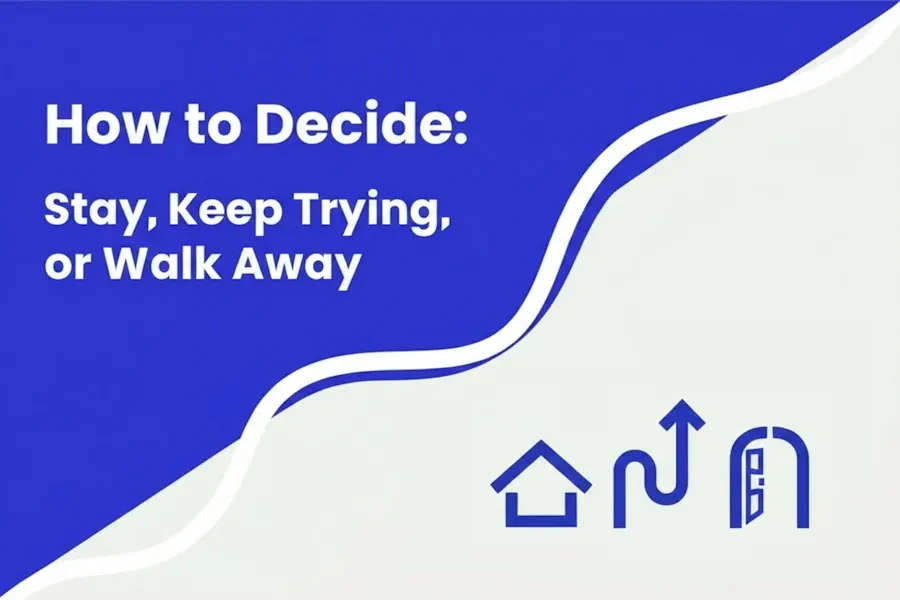
The most challenging part is not understanding the reason behind the problem, but being able to deal with what to do next. The decision when to walk away from sexless marriage is based on a combination of feeling and reason.
Good self-reflection skills are necessary to identify the best reason for choosing to leave the marriage that leads to long term happiness.
A Simple Decision Framework You Can Use Today
Think about your answers to these questions without lying to yourself:
- Am I staying out of love or fear? If you are committed out of fear of being alone or of the financial challenges of going through a divorce, your basis is fear, not connection.
- Have I exhausted realistic options? If you have sought therapy and good communication channels but have seen no positive change, then you have done your part.
- What would I advise a close friend? We are often kinder and more objective when looking at others’ lives.
- Is my partner willing to work on this? A “no” to this question is often the final answer.
Also, you can use a reflection journal for 30 days. If the pattern of rejection and distance remains unchanged despite your awareness, the pattern is structural.
What to Do Next If You Decide to Leave
If you think it’s time to move forward, the next step is not to act impulsively but to prepare. Going from making an emotional decision to taking practical actions requires planning.
Focus on preparing yourself emotionally through therapy and creating a support network. At the same time, start working on financial preparations by understanding your financial resources and assets.
If you are looking for a simple and affordable way to deal with legal issues related to divorce, YourForms provides easy-to-use online tools to prepare uncontested divorce papers.
Most users can have their documents ready within 2-3 days, providing good chances to have control and clear understanding of the procedure.
Many people navigating this same decision have shared how straightforward the process turned out to be — you can read their experiences in YourForms reviews.
Whether you want to live together or separate, remember that maintaining good mental peace and enjoying a fulfilling life is an important part of this journey.