So, how long does an uncontested divorce take? Generally, uncontested divorces are concluded within 2 to 6 months.
However, the duration varies by state. Delays might occur due to several factors, including waiting time, court backlogs, children, document signing, and filing errors. YourForms can assist in preparing divorce papers, but only the court can finalize them.
There are three basic steps involved. First, divorce documents should be prepared. Secondly, there is the filing and serving of the papers.
Finally, the court conducts its analysis of the divorce proceedings. The documentation phase is normally the easiest to handle quickly.
If both parties are in agreement, you can complete your state-specific divorce forms using YourForms before the court schedule begins.
Quick Answer: How Long Can an Uncontested Divorce Take?
An uncontested divorce in the United States can take up to 2-6 months. A straightforward divorce that has nothing to do with children can take about 2-4 months.
How long does an uncontested divorce take with children? The procedure will most likely take 3-6 months.
Prepare your uncontested divorce forms online with YourForms and avoid losing time on incomplete or wrong paperwork.
Typical Timeline When Both Spouses Agree
An uncontested divorce usually lasts between 2 and 6 months when both parties agree. Being in agreement makes everything move much faster since there will be no more negotiation, discovery, hearings, or trials.
Even if everyone agrees, it must still be reviewed by the courts. Everything from property division to child support must be included.
If you agree on the essential elements, YourForms can assist in preparing your divorce documents.
What Can Be Done Fast and What Still Depends on the Court
It is easier to get around with your forms, documentation, signatures, and other information. YourForms will assist you with the manageable task of preparing state-specific documents.
The court has control over the final approval, issuance of the decree, hearing dates, and review period. The laws of the state dictate the waiting periods and residence requirements.
Begin with the task which you can manage: prepare state-specific divorce forms before filing.
Why Uncontested Does Not Mean Instant
An uncontested divorce refers to both individuals agreeing on the details of their divorce. However, it does not imply that the court will approve the case.
Divorce is finalized after the issuance of the decree by the judge. Even simple divorces may take time due to missing signatures, incorrect disclosures, filing in the wrong county, and other issues.
What Makes a Divorce Uncontested?
Uncontested divorces involve spouses reaching an agreement on the basic terms. There is nothing left for the court to decide for them. Property, debt, or children do not make a divorce contested. The true question is agreement.
New York Courts call it a divorce without a dispute involving money or divorce, which includes custody, support, property, and spousal support.
If you have an uncontested divorce, YourForms is able to help you with the right forms.
Agreement on Money, Property, and Children
Both parties have to reach an agreement on all necessary points. This includes property settlement, debt arrangements, spousal support, and provisions related to children when there are children.
When there are children, parents may be expected to agree on child custody and access rights, child support, health care, and decision-making. The presence of an unresolved issue may mean you require more time or legal assistance.
Make sure you know all the agreement details before starting, since YourForms can prepare the necessary forms.
Signed Papers and Spouse Cooperation
A cooperative spouse can speed up the procedure. He or she will sign the form, accept service, return the document, or waive certain requirements, if permitted by law.
Nevertheless, signing the document does not mean that the procedure is over. It should be approved and signed by the judge.
YourForms can assist people in identifying which documents require signing, notarization, or filing. However, it is the court that determines the final decision about that matter.
When the Case Stops Being Uncontested
The dispute begins when one of the two parties refuses to agree to anything. Differences over children, maintenance, debt division, property distribution, alimony, or even moving out of the matrimonial home can hinder the process.
In addition, there can be cases involving hidden assets, blackmail, duress, and safety issues. In such scenarios, forms alone may not suffice.
YourForms is appropriate for preparing documents for uncontested cases only.
Uncontested Divorce Timeline From Start to Finish
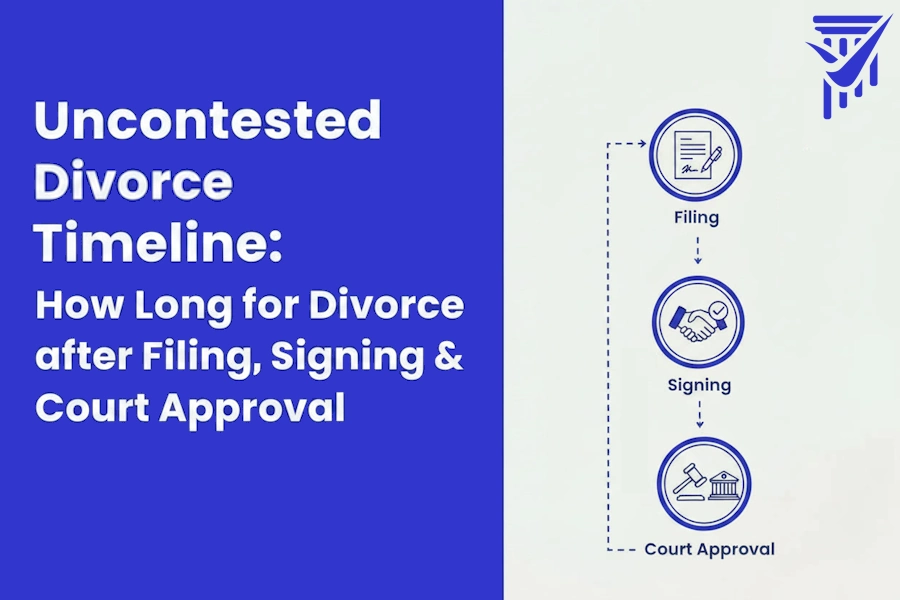
An uncontested divorce typically follows a very straightforward process. An agreement must be reached by both parties first. Next comes the paperwork, filing, serving, and court approval.
Time may also need to pass. YourForms can complete your paperwork in approximately 2-3 days, provided you are well-organized.
It takes 1-30 days to complete service, response periods take 20-30 days, and an uncontested case takes 2-6 months. Corrections to your paperwork take an additional 30-60 days.
Prepare your paperwork before filing so the court process does not start with avoidable errors.
Step 1: Reach Full Agreement Before Filing
An uncontested divorce, which is quicker to process, begins with total agreement. The parties will need to agree upon property issues, debts, spousal support, and anything involving children prior to filing for divorce.
Also, fees, services, signature, parenting time, child support, and health insurance have to be considered.
After you reach an agreement, YourForms can assist in preparing your documents for your state and situation.
Step 2: Prepare State-Specific Divorce Papers
Paperwork is important. Every state, and often every county, may have its own particular forms, notices, disclosures, signatures, and papers pertaining to children.
Incomplete paperwork, despite mutual agreement between the parties, may delay the case. Proper paperwork will minimize the need for corrections and refilling.
Begin working on state-specific uncontested divorce forms using YourForms.
Step 3: Filing with the Court and Serving your Spouse
Properly handling spouse service / waiver of service is a critical requirement. The rules and filing fees vary from state to state and from county to county. Service of the other party will generally be required along with a signed waiver.
Cooperation from the other party will help speed up the process. If service becomes difficult, the timeline can stretch.
YourForms Court Filing Service, when available, can assist with reviewing your forms and e-filing, but court costs and timelines are not included.
Step 4: Court Review, Waiting Period, and Final Decree
The final step is that of court approval. While both parties might be fully satisfied with the agreement, the approval of the papers depends on the judge.
The court may also decide to apply the waiting period of the state before granting the divorce. Divorce becomes complete only when the final decree is signed.
In some cases, where there are kids involved, a thorough children and parenting plan review is necessary.
How Long Does an Uncontested Divorce Take After Filing?
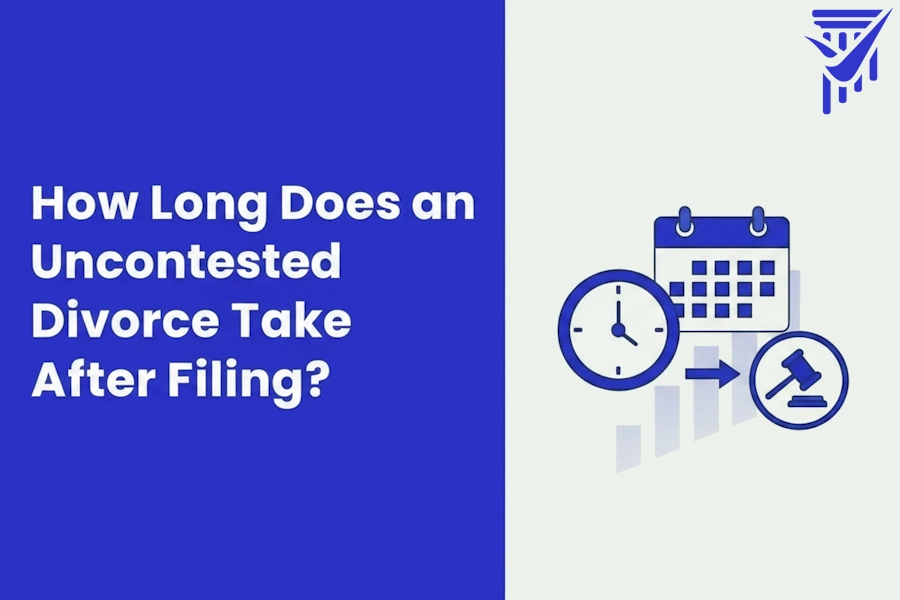
Once filed, an uncontested divorce may take a couple of weeks to a few months. The time taken varies depending on:
- Court schedule;
- State laws;
- Service of the spouse;
- Judge availability;
- Quality of the forms submitted.
How long does an uncontested divorce take in Florida? There is a 20-day minimum period before the divorce is finalized. For comparison, in California, a divorce should take at least 6 months. In Texas, there is a minimum of 60 days post-filing.
Make sure you have completed your forms and that they meet state requirements before filing.
Fastest Realistic Timeline After Filing
The most rapid timeline will always depend on the state’s regulations first. Some courts may be able to act within a matter of weeks. Many states impose a minimum period that must pass before any final ruling.
In Ohio divorce cases, both parties must be present within 30-90 days of filing. California needs at least 6 months to finish the process. Texas cannot finalize for at least 60 days.
Even if the regulations allow for a swift procedure, other factors may slow the process.
When Court Backlogs Add Weeks or Months
A significant court backlog could cause an otherwise uncontested divorce to take longer. However, the court will still need to process the application, examine the completed documents, schedule the necessary hearing, and issue the final decree.
Also, there may be a variation in timing among the counties. Busy metro courts operate more slowly due to high volumes, staffing levels, and local practices.
Do not give the court an excuse to make your case linger by making sure that you prepare the documents accurately before filing them.
How Paperwork Errors Can Reset the Clock
Any paperwork rejection from the court will likely require immediate corrections. Paperwork errors can extend the time it takes by several weeks. The case could be denied or asked for amendments by the court.
Such issues could range from signatures missing to filing in the wrong county, from incomplete disclosure to out-of-date forms. It is easy to manage such risks to your timeline.
Take advantage of YourForms to get state-specific uncontested divorce forms done right.
How Long After Signing Divorce Papers Is It Final?
Signatures on divorce papers do not necessarily terminate the marriage. In most states, a divorce is finalized only after court approval. The decree or judgment must be signed by the judge and recorded by the court.
This depends on the state and the kind of document you need to sign.
YourForms can assist you in determining which documents may require signing, notarization, and filing, but final approval is determined by the court.
Signing Papers Does Not Usually End the Divorce
The signed document usually indicates consent of both parties. This is very important; however, this does not necessarily mean that it is the last thing to do legally.
It can still be needed to file the documents, serve them, notarize them, correct them, or have the court review them. A signed settlement agreement does not equal a divorce.
Never consider the divorce final until the court enters its final order.
Judge Approval and Final Decree Timing
Factors affecting judge signature timing mean that approval can take days or weeks. You might wonder: How long does it take for a judge to sign divorce papers?
The court will need to look at the documents and make sure that all of the requirements are satisfied. They will also have to sign the final decree or judgment. If there are children involved in the case, then the process may take some extra time.
There are many factors that might be examined, such as the parenting plan, custody arrangements, and child support. Some courts also require a short final hearing.
The best way to prevent any unnecessary delays is to complete your documents properly.
What to Check Before Assuming You Are Divorced
Before considering your divorce finalized, look at the court’s file. The judge must have signed the order, the court must have filed the order, and the waiting period must have expired.
Additional filing, service, and parenting classes may need to be completed before you can finalize your divorce. Certified copies will be required down the road for name changes, Social Security benefits, passports, and bank records.
How State Waiting Periods Affect an Uncontested Divorce
Understanding state waiting periods is crucial, as they define the earliest possible end date. Sometimes, even with total cooperation and signed forms, there will still be a wait for the court.
The other waiting laws are residency laws and separation laws. These laws should not be perceived as court delays, but rather state laws.
Get your state-specific divorce papers prepared through YourForms.
States With Short or No Waiting Periods
While some have waiting periods, others have none. However, it must be heard in court. In Florida, a minimum of 20 days is required after filing.
How long does an uncontested divorce take in Illinois, then? While there is no mandatory filing wait, the 90-day residency requirement is essential before the judgment can be entered.
If you’re wondering how long an uncontested divorce takes in NY, note that hearings may be quicker once the defendant signs; default hearings may take longer after service.
No waiting period does not equate to no court delays.
States With Mandatory Waiting or Separation Rules
Some states impose a longer period.
- In California, you need to wait at least 6 months.
- In Texas, normally, the required period is 60 days from the filing date.
- Virginia requires either 1 year of separation or 6 months in some instances where there are no minor children.
- For North Carolina, the law states that there needs to be 1 year of separation prior to an absolute divorce being granted.
YourForms will assist in preparation, not in avoiding the legal period.
State Timeline Examples: Texas, New York, Illinois, Florida, and California
State laws may quickly alter the timeline. Here are some examples that occur frequently:
| State | Minimum rule | What can still delay it |
| Texas | 60 days after filing in most cases | Court schedule, final hearing, errors |
| New York | Immediate filing if the defendant signs; 40 days after service if default | County processing, missing forms |
| Illinois | No filing wait, but 90-day residency before judgment | Local court scheduling |
| Florida | 20 days after filing in most cases | Court availability, parenting course |
| California | At least 6 months | Hard minimum, service, court review |
YourForms generates state-specific forms based on the state in which the user files his or her claim.
How Long Does an Uncontested Divorce Take With Children?
Uncontested divorce with children usually takes 3-6 months. This will be an uncontested case if both parents agree. More time may be required by the court to consider parenting plans, custody arrangements, child support, health insurance, and many other child-related forms.
YourForms may assist you in an uncontested divorce with children if both spouses agree on certain issues. YourForms does not have jurisdiction over custody or child support.
Why Children Can Add Review Time Without Making the Case Contested
Kids create additional criteria that the court must take into account. It can analyze factors such as visitation time, custodial arrangements, child support payments, health insurance coverage, and the best interests of the child. There will also be more possibilities for mistakes due to additional documentation.
If both parents agree, YourForms can help you prepare the right uncontested divorce papers.
Parenting Plans, Child Support, and Required Classes
Many states require mandatory parenting classes as part of the process. The typical parenting plan addresses the child’s residence, vacations, schooling, transportation, and major decision-making issues.
Child support information can include details on income, expenses, health care coverage, and state worksheets. Many states require parental education as part of the divorce process.
The Parent Education and Family Stabilization course for divorcing parents takes a minimum of four hours, as per the Florida DCF.
Generate divorce forms involving your child with step-by-step guidance.
When a Case With Children Stops Being Uncontested
An example of a contested case is one in which parents disagree on how to proceed. Custody, parenting schedule, financial support, relocation, educational decisions, health, and safety are among the many factors that could delay the proceedings.
If the other side fails to cooperate, then the process will be extended. Safety concerns would require legal intervention.
YourForms cannot replace legal advice, mediation services, or custody services.
What Can Delay an Uncontested Divorce?
There are many legitimate reasons why an uncontested divorce might move slowly.
These may include incorrect documents, missing signatures, process issues, inadequate disclosures, court backlogs, mandatory waiting periods, and filing in the wrong place. Even if you agree, your case must still comply with court rules.
Eliminate unnecessary delays caused by poor paperwork with state-specific uncontested divorce forms from YourForms.
Missing Signatures or Spouse Cooperation Problems
Simple oversights like missing signatures will inevitably impede progress. The Court might require evidence of the spouse’s service, signature, answer, and waiver of service.
A spouse who evades service, takes their time with the paperwork, or is unresponsive will hinder the process. When the spouse cannot be found, other actions might be necessary.
Utilize YourForms to know what forms have been filed, what needs to be signed, and what requires a spouse’s actions.
Wrong Forms, Incomplete Disclosures, or Local Court Rules
Incorrect formats can cause delays of several weeks. The court may request revisions, additional papers, or a new filing.
Every state will have its own forms; these forms cannot replace each other. Additional forms related to children might be required for cases involving minors.
Prepared state-specific divorce forms should be downloaded online to avoid making guesses about the court’s PDF documents.
Filing in the Wrong County or Before Meeting Residency Rules
Navigating a wrong county/residency issue is important, as filing in an incorrect county can lead to delays. The residency requirement in California is that at least one of the spouses should have stayed in the state for six months.
Furthermore, at least three months before filing for divorce, the spouses should be living in the same county.
Similarly, in Minnesota (MN), at least one spouse should stay in the state for 180 days before filing for divorce.
Begin with your state and county information to enable YourForms to compile the appropriate filing kit.
How to Make an Uncontested Divorce Move Faster
A quick, uncontested divorce begins even before filing. It is vital that both parties agree on all the important details. The forms should be complete and relevant to the state.
Signatures, service, and responses from the courts should also be fast. It is impossible to circumvent the required waiting period.
Prepare your uncontested divorce documents with YourForms.
Agree on All Terms Before Filing
Total agreement is time-saving. The property, debts, alimony, children, parenting time, child support, court costs, and filing cooperation should all be sorted out prior to filing. An unsettled item could delay the case or complicate the whole procedure.
Prepare Complete and Accurate Documents
Proper documentation will prevent delays. Missing signatures, using the wrong form, and incomplete disclosure may add weeks to the process.
Review all names, dates, county, children, property, debts, support agreement, signatures, and notarizations before filing.
Create your divorce papers online with YourForms today!
Use Online Divorce Forms When the Case Is Truly Uncontested
The online divorce form could be useful for couples who agree on the matter. The online form makes the process easier to understand by reducing state-specific forms’ confusion.
Online divorce forms could also assist users even when they do not have a lawyer. YourForms offers state-specific forms preparation and filing information. YourForms is neither a law firm nor a provider of legal advice.
In case you have an uncontested divorce case, prepare your divorce forms using YourForms online.
How YourForms Helps With the Uncontested Divorce Timeline
YourForms helps in filing of documents for uncontested divorces. You can file state-specific forms through YourForms depending on your circumstances.
However, the court will be responsible for the waiting period, review period, and the final approval process. Prices start from $69 per month. Many customers share how the process went for them in YourForms reviews.
Start on uncontested divorce paperwork through YourForms.
Get Ready-to-File Divorce Papers Faster
Divorce documents will be prepared more quickly for the organized customers using YourForms. It helps to optimize the documentation process, but not the court procedure.
Prior to filling out the forms, collect all information related to the state, county, your spouse, children, assets, liabilities, alimony, location of your spouse, and agreement conditions.
Get ready to file uncontested divorce documents online.
Optional Filing, Review, E-Signature, Notary, and Delivery Support
Add-on support is available in YourForms. This includes document review, filing assistance, electronic signature, notarization, and delivery services.
Whether this add-on is available will depend on your location, the documents, and the selected add-on services. Certain add-ons may incur additional costs, which will be displayed before purchase.
Select your desired add-on level of support once you have prepared your forms.
What YourForms Cannot Speed Up
YourForms cannot influence court delays, a judge’s consideration, waiting periods, your spouse’s cooperation, or final acceptance. It cannot reduce the deadline set by the state, address postal issues, resolve problems with e-filing, or make the judge sign quicker.
Use YourForms for the parts you can control: organized, state-specific paperwork and clear filing instructions.
Final Timeline Checklist Before You File
Before starting an uncontested divorce, there are certain things that must be checked first. One must verify his or her state requirements, county, residency, spouse’s consent, notification plan, signatures, costs, and documents.
In case you have kids, you should also look through the necessary forms for children.
Ready to proceed? Prepare your uncontested divorce forms online with YourForms.
Questions to Ask Before Starting
Ensure that it’s truly an uncontested case before you begin. Do both spouses want a divorce? Have all the concerns regarding the distribution of assets, debts, maintenance, custody, visitation, and child support been resolved?
In addition, make sure there are no issues regarding the location of your spouse or coercion involved.
In case it’s a clear-cut and uncontested case, YourForms can assist you in preparing all necessary documents.
Documents and Decisions to Prepare Early
Proper preparation will expedite the process of filling out the paperwork. Collect all the pertinent information regarding marriage.
These include the names and contact details of both spouses; their kids’ names and birthdays; financial information, assets, debts, and support provisions; county information; and the date of separation, if applicable.
Collect all your information and start the YourForms interview.