

Minnesota Uncontested Divorce Online
If you and your spouse agree on the terms of your separation, you may be able to handle the paperwork together. An uncontested divorce in Minnesota means reaching a mutual agreement on every issue, including property, debts, alimony, and any child custody and support arrangements. You can then file a Joint Petition (a shared request to end your marriage) and submit it electronically through the approved court system.
YourForms offers a budget-friendly way to prepare your documents from the comfort of home. Our document packages and step-by-step filing instructions can make the paperwork feel more manageable and help reduce the expense of attorney document preparation.
What is an Uncontested Divorce?
An uncontested divorce in MN means you and your spouse both agree that your marriage is “irretrievably broken” – there’s no chance of getting back together. You also work out everything together: how to split your property and debts, whether one of you will get maintenance (alimony), and any child custody and parenting time plans. Since you’re both on the same page, the process may involve fewer disputes and take less time.
Agreeing to end the marriage alone is not enough. Your agreement must cover all applicable terms, and the court still reviews it.
Key Differences between Summary Dissolution, Standard Joint Petition, and Contested Divorce
- Summary dissolution offers a streamlined process for couples meeting requirements. These include a marriage under 8 years, generally no joint minor children, no pregnancy or real estate, and no domestic abuse between spouses. Marital debts cannot exceed $8,000, excluding vehicle loans. Assets can't exceed $25,000, and neither spouse’s nonmarital assets can exceed $25,000.
- A standard Joint Petition allows the couple to file together after settling all terms. Spouses can use this option with children, real estate, or finances exceeding summary limits.
- Contested divorces in Minnesota involve unresolved disagreements. Partners may negotiate or use mediation to reach an agreement. A judge decides any issues they cannot settle.
Online Uncontested Divorce in Minnesota: Do You Qualify?

Before filing for uncontested divorce in Minnesota, you have to have all the terms settled and both of you have to sign the joint papers. Normally at least one party has to have lived in the state for 180 days prior to the filing of the case. Military service or maintaining a permanent home in the state are other ways to qualify. There is also a very narrow nonresident exception.
| Pathway | Main requirements |
|---|---|
| Summary dissolution (DIV202) |
|
| Standard Joint Petition without children (DIV302) |
|
| Standard Joint Petition with children (DIV1702) |
|
Choose MN divorce forms that match your circumstances. For standard joint filings, qualifying public assistance triggers notice to the county agency using DIV813 and proof of service using DIV816. Parents can estimate payments using the state’s Child Support Guidelines Calculator; the court determines the appropriate amount.
YourForms Service Tiers
Understanding Divorce Requirements: Residency and No-Fault Rules

180-Day State Residency Standard (And Military Member Rules)
If you’re researching how to file for divorce in MN, first check whether you or your spouse meets the residency requirement. Generally, either spouse must have lived in the state for at least 180 days immediately before the proceeding begins.
Military members can qualify through being stationed there for that period. Another route is maintaining Minnesota as your permanent legal home, called “domicile,” for those 180 days. This can matter for military members serving elsewhere. Both spouses do not need to meet the requirement.
No-Fault Grounds: Irretrievable Breakdown of Marriage
Your Minnesota divorce paperwork must state that the marriage has suffered “irretrievable breakdown.” This means there is no reasonable prospect of reconciliation.
Under this no-fault rule, neither party needs to prove adultery or other wrongdoing to obtain a divorce. A spouse's objection does not automatically prevent it: the court can grant a dissolution after finding that the marriage is irretrievably broken. An uncontested case also requires agreement on all divorce terms.
Step-by-Step Guide: The Uncontested Divorce Process

Learning how to file for divorce in Minnesota starts with choosing the correct joint packet. These steps cover standard joint filings, with or without children.
- Step 1
Completing the Joint Petition (DIV1702/DIV302) and Non-Public Forms (CON111/CON112)
Use DIV1702 if you have joint minor children, or DIV302 if you qualify to file for divorce without children. Instead of hunting down the correct paperwork, YourForms automatically generates DIV1702 or DIV302 based on your answers.
List all property and debts, including anything held in one spouse’s name. Record your agreement on alimony. Parents must also address custody, parenting time, and other issues.
Both parties must sign under penalty of perjury. Put sensitive identifiers, such as Social Security numbers, on CON111. Use CON112 when submitting confidential financial records, such as pay stubs or tax returns. Attach income documentation when required, including cases involving joint minor children or requested maintenance.
- Step 2
Notifying the County Public Authority (If Public Assistance Received - DIV813/DIV816)
If either spouse receives qualifying assistance or applies for assistance after the case has started, the spouse must notify the county agency that handles that assistance. Follow the packet instructions to mail or hand‑deliver the DIV813 form and the required confidential information.
The person who delivers or mails the notice must complete the DIV816 form, which records proof of service. Keep copies of the DIV816 form with your Minnesota divorce papers. File the notice and the affidavit.
Contact the county agency to find out if any review of your proposed agreement is required.
- Step 3
Filing Options: In-Person, Mail, or Electronic Filing (TylerTech eFiling)
You can file your completed divorce papers in Minnesota electronically through the state's approved eFile and eServe system, powered by Tyler Technologies.
You can also mail or bring signed documents to the district courthouse in the county where either spouse lives. Include the fee or a waiver request. Once both spouses have signed, either can submit the paperwork without the other being present.
- Step 4
Review by Judicial Officer and Official Entry of Judgment and Decree
A judge will look over the agreement and all supporting papers. If something is missing or unclear, the judge may ask you to change the paperwork or come to a hearing.
The divorce becomes final once the judge signs the Judgment and Decree and the court staff writes it into the record. Just sending your papers does not end the marriage. Keep copies of the entered decree and the notice of entry.
Navigating Specific Divorce Forms: Public Authority Notice, Child Support, and Fee Waivers
Notifying the County Support Office (MFIP, Medical Assistance, and Child Care)
If either spouse receives or applies for qualifying assistance, including MFIP, Medical Assistance, or Child Care Assistance, county notification is required. Use DIV813 for the notice and DIV816 to document delivery. Follow the packet instructions for providing confidential information and arranging any agency review.
Child Support Calculations and Required Financial Disclosures
The Child Support Guidelines Calculator estimates payments using both parties’ incomes, parenting time and other relevant information. The court determines the final amount.
One critical fact parents sometimes overlook: agreeing on payments does not remove the income-disclosure requirement. Provide additional records, such as pay stubs or tax returns, even if you propose no payments.
Requesting a Court Fee Waiver (FEE102 and 125% Federal Poverty Guidelines)
For a cheap uncontested divorce, Minnesota residents may qualify for a waiver that reduces court costs. Complete FEE102, the Affidavit to request the waiver.
You may qualify through public assistance, income at or below 125% of the current federal poverty guidelines, or demonstrated inability to pay. The judge decides your request. An approved waiver covers only the costs specified in the order.
Why Choose YourForms for Your Divorce?
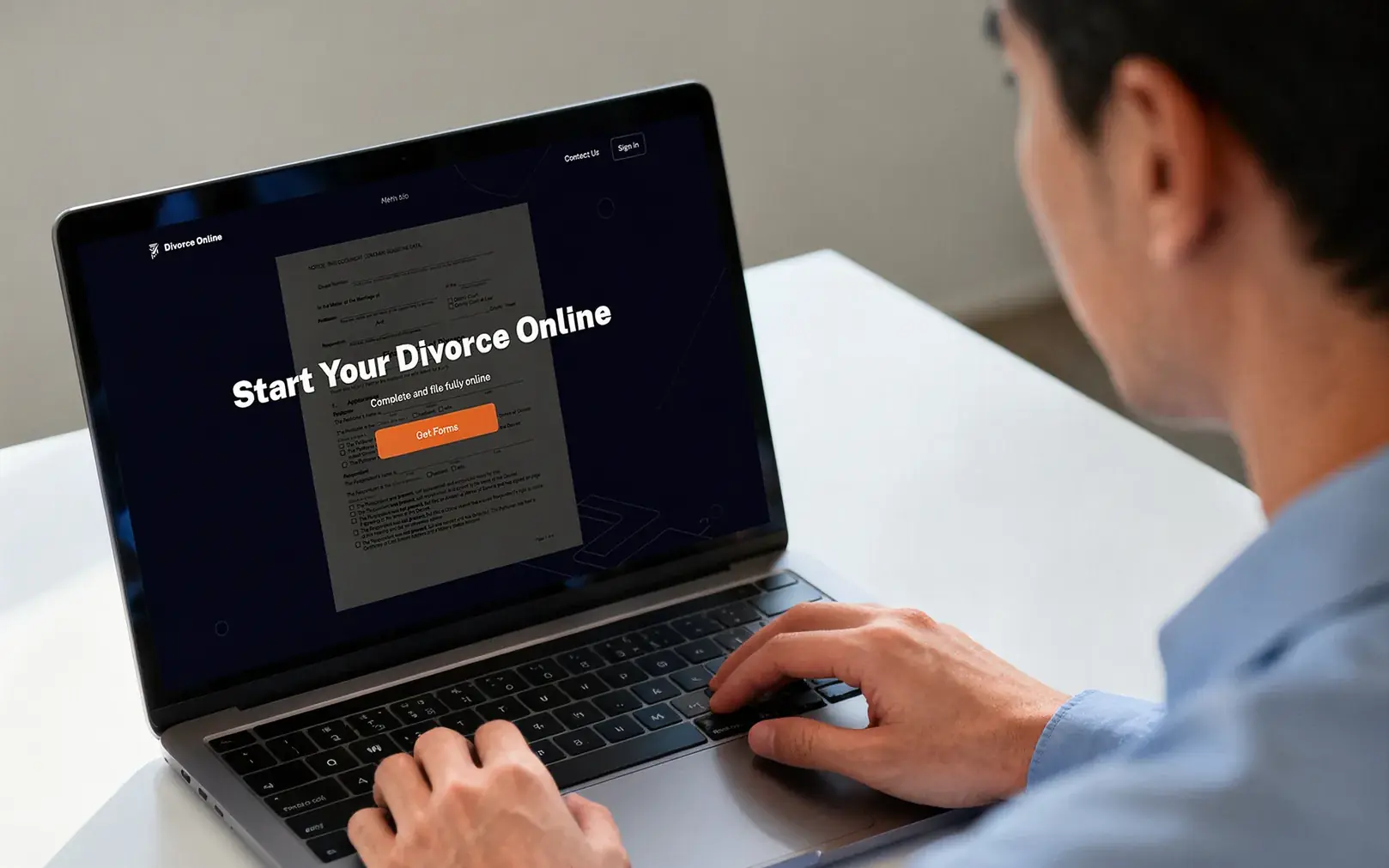
YourForms offers document preparation and filing instructions for couples who have settled their divorce terms. Our Minnesota divorce online service helps you prepare documents from home, with access across devices and Case Manager support.
When preparing for divorce online, Minnesota spouses should compare the assistance included and the full cost, including recurring charges.
| Attorney | YourForms |
|---|---|
| Cost: | |
| Depends on the work and billing arrangement. | Typically from $538 to $648+ (Includes ~$400 court fee and your selected YourForms plan) |
| Document preparation: | |
| Provides legal advice and draft documents. | Provides a divorce document package with possible Case Manager review. |
| Filing assistance: | |
| May file under your agreement. | Formatted for the Minnesota TylerTech eFiling portal. |
| Public-agency notices: | |
| Required notices depend on your circumstances. Check that your package includes DIV813 and DIV816 when needed. | |
How YourForms Works: Step-by-Step Process
 STEP 01
Choose your plan.
Compare DIY Basic with Full Support, which includes document review and ongoing assistance.
 STEP 02
Provide your information.
Supply accurate details about your spouse, finances, property and agreed divorce terms. Document preparation depends on the information you provide.
 STEP 03
Review your forms.
Check names, figures, and every agreement before signing. A Case Manager’s review does not replace personalized legal advice.
 STEP 04
Submit your paperwork.
Follow the filing instructions and respond to any court requests during the review process. Preparing documents does not itself finalize your divorce.
Key Divorce Rules: Costs, Timeline, and Laws

How Much Does a Divorce Cost?
For a divorce, Minnesota cost estimates range from about $2,400–$5,500 for an attorney-assisted uncontested case to $10,400–$30,000 or more per spouse for litigation. A fully DIY divorce avoids attorney document-preparation charges, but court fees and other expenses may still apply.
 Related article: Cost of Divorce in Minnesota
How Long Does an Uncontested Divorce Take?
An uncontested divorce can take several months. The process depends on court schedules, whether your forms are complete, and any issue requiring review. Preparing documents quickly does not determine when your dissolution becomes final.
Minnesota Divorce Laws, Grounds, and Asset Division Rules
The law permits no-fault divorce based on an irretrievable breakdown. Marital assets must be divided fairly, though not necessarily equally. Spousal maintenance, also called alimony, requires separate consideration.